
Blog
Blog

Growth
Clarity
Support
Compassion
Blog
Insights, Inspiration, and Wellness Tips for Your Journey
Welcome to our blog, where we share valuable articles, expert advice, and insightful resources to support your mental health and well-being. Whether you’re looking for tips on managing stress, understanding emotional wellness, or exploring therapeutic approaches, our blog is here to inform and inspire you. Stay connected and empowered on your journey to a healthier, more balanced life.
Growth.
Clarity.
Support. Compassion.
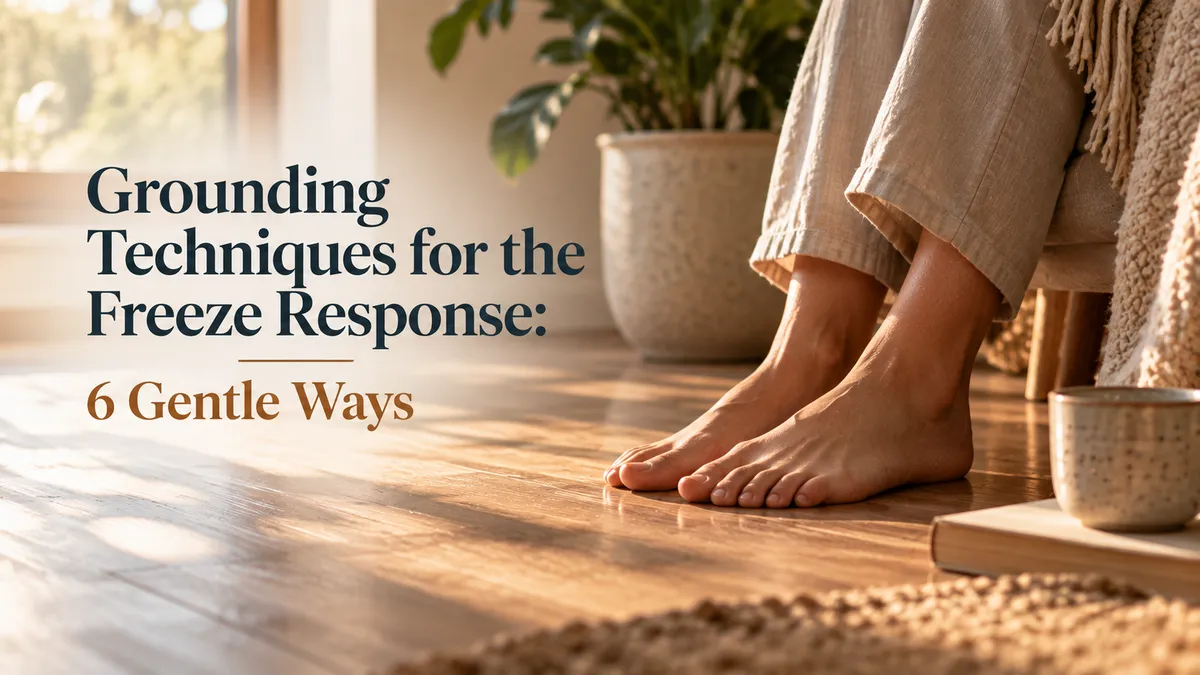
Grounding Techniques for the Freeze Response: 6 Gentle Ways
Grounding Techniques for the Freeze Response: Gentle Ways to Come Back Into Your Body
Grounding techniques for the freeze response are small, gentle actions that bring your attention back to your body and your surroundings when you feel numb, stuck or shut down. Slowly looking around the room, pressing your feet into the floor, wiggling your fingers and toes, holding something warm and humming can all help. With freeze, the key is to go slowly and start small.
Have you ever sat on the sofa knowing there were things to do, and felt completely unable to move?
Or noticed yourself going blank in the middle of a conversation, as if someone had turned the volume down on the world?
That heavy, far-away, switched-off feeling is often the freeze response. If you have lived through trauma, you may know it well.
In this blog, we'll look at what the freeze response is, why the usual calming advice can feel like too much, and six gentle grounding techniques that may help you come back into your body at your own pace.
What Is the Freeze Response?
The freeze response is one of the nervous system's automatic survival responses, alongside fight, flight and fawn. When your body senses a threat it can't fight or escape, it may slow everything down instead. Energy drops, feelings go quiet and the body becomes still.
In a moment of real danger, this is protective. The difficulty comes when the nervous system keeps returning to freeze long after the danger has passed. Everyday stress, conflict or simply having too much on your plate can be enough to tip you back into it.
For many women, freeze doesn't look dramatic. From the outside, you may seem calm and capable. On the inside, you feel flat, foggy and far away. If that sounds familiar, you may recognise yourself in our article on functional freeze symptoms.
Signs You Might Be in Freeze
Feeling numb, flat or emotionally "switched off"
Heavy limbs, or a body that feels hard to move
Brain fog, or losing your words mid-sentence
Staring at your phone or a wall without taking anything in
Feeling as though you're watching your life from behind glass
Knowing what you need to do, yet being unable to start
Tiredness that rest doesn't seem to fix
These are nervous system responses. They don't mean you are lazy, broken or failing.
Why Grounding Helps When You Feel Frozen
Freeze pulls you away from the present moment. Your attention drifts inward or goes blank, and your body can feel distant or unreal.
Grounding gently works the other way. It uses your senses and small movements to give your nervous system simple, present-moment information:
I am here. My feet are on the floor. I can see the room. I am safe enough right now.
With practice, this may help your body learn that it can come out of freeze gradually, without staying stuck or jolting into panic.
Why "Just Relax" or Deep Breathing May Not Help
When you're frozen, advice like "take a deep breath" or "just relax" can land badly. Freeze is already a state of shutdown. Your body often needs a small, safe amount of energy and connection before it needs more calm.
Some women also find that focusing hard on their breathing makes them feel more anxious. If that's you, nothing is wrong with you. It simply means breath-focused techniques may not be the best place to start.
The aim is to invite your body back one small step at a time, without forcing yourself out of freeze.
6 Gentle Grounding Techniques for the Freeze Response
Try one at a time. There is no right way to do these. If something doesn't feel good, stop and try another.
1. Let Your Eyes Wander (Orienting)
Slowly let your eyes move around the room, and let your head turn with them. Notice colours, shapes and light. Name three things you can see.
This is called orienting. It is one of the simplest ways to remind your nervous system that you are here, in this room, today.
2. Press Your Feet Into the Floor
Sit or stand and press both feet firmly into the ground for a few seconds, then release. Notice the floor holding you up. Repeat a few times, rocking your weight gently from heel to toe.
3. Wake Up Your Hands and Feet
Wiggle your fingers and toes. Rub your palms together. Gently squeeze down your arms from shoulder to wrist. Small movements like these may bring sensation back gradually, without asking too much of your body at once.
4. Hold Something Warm
Wrap your hands around a warm mug, or hold a hot water bottle against your tummy. Warmth is a gentle sensory anchor, and many women find it comforting in a way that is easy to receive.
5. Hum or Sigh
Try a slow, low hum, or let out an audible sigh on the out-breath. Sound creates a soft vibration in the chest and throat, and many people find it helps them feel more present. Keep it gentle and let your breath find its own rhythm.
6. Give Yourself a Self-Hold
Place one hand on your upper arm and the other on your forehead or chest. Stay for a minute or two and notice any small shift, perhaps a deeper breath, a sigh or a little more warmth. This offers your body a sense of containment and support.
How to Make Grounding Part of Your Day
Grounding tends to work best when you practise it before you need it.
Choose one technique and try it once a day for a week
Pair it with something you already do, like waiting for the kettle
Keep it short: 30 seconds to two minutes is enough
Look for small changes, not big breakthroughs
Every time you come back into your body, even briefly, you give your nervous system a new experience of safety. Over time, those moments can start to shift old patterns. You can read more about that in how to recognise and break trauma patterns.
When to Get Extra Support
Grounding techniques are helpful tools, but they aren't a replacement for professional support. It may be time to work with a trauma-informed therapist if:
you spend much of your day in freeze
grounding brings up strong emotions or memories
you feel disconnected from yourself for long period
You Don't Have to Find Your Way Back Alone
Freeze can make it hard to reach out, which is exactly why support matters.
I'm Caroline Reed, an MBACP-registered psychotherapist. I help women understand their nervous system and gently move out of survival states like freeze, using body-based (somatic) trauma therapy. Together, we work at a pace your body can manage, so change feels safe rather than overwhelming.
If you'd like to talk about what's been happening for you, you can book a free 15-minute call with me. There's no pressure, just a chance to see whether working together feels right.
👉 Book your free 15-minute call with Caroline
Frequently Asked Questions
What is the freeze response in trauma?
The freeze response is an automatic survival reaction. When the body senses a threat it can't fight or escape, the nervous system slows down, which can leave you feeling numb, still or shut down. After trauma, the body may slip into freeze even when you are actually safe.
What does being stuck in freeze feel like?
Many women describe feeling numb, foggy, heavy or far away. You might struggle to start simple tasks, lose your words, or feel as though you're watching life from a distance. Tiredness that rest doesn't fix is also common.
What are the best grounding techniques for the freeze response?
Gentle, sensory techniques often suit freeze best. These include slowly looking around the room, pressing your feet into the floor, wiggling your fingers and toes, holding something warm, humming, and placing a hand on your arm and forehead. Start small and go slowly.
How do you get out of freeze mode?
Gently, and one small step at a time. Trying to force yourself out of freeze can backfire. Small movements, orienting to your surroundings and warmth can invite your body back gradually. If you often feel stuck, a trauma-informed therapist can offer extra support.
Is the freeze response the same as dissociation?
They are related but not identical. Freeze is a survival state in which the body slows down, and it can include feeling detached or unreal. Dissociation is a broader term. If you often feel disconnected from yourself, it's worth talking to a qualified professional.
Why doesn't deep breathing help when I'm frozen?
Freeze is already a shutdown state, so your body may need a little gentle energy and connection before it needs more calm. Some people also feel more anxious when they focus on their breath. Movement and sensory grounding can be a softer place to start.
How long does it take for grounding techniques to work?
It varies from person to person. Some people notice a small shift within a minute or two, while for others the benefit builds with regular practice. Practising daily, especially when you feel fairly calm, may help your nervous system respond more easily over time.
Can therapy help with the freeze response?
Many people find that trauma-informed therapy, particularly somatic or body-based approaches, supports them in understanding and gently working with freeze. A therapist can help you build safety in your body at a manageable pace.
About the author
Caroline Reed is an MBACP-registered psychotherapist and the founder of Life Beyond Trauma. She specialises in somatic, nervous-system-based trauma recovery for women and works online with clients in the UK and internationally.
This article is for general information and education only. It is not a substitute for medical advice, diagnosis or treatment. If you are struggling, please speak to your GP or a qualified mental health professional.

You Deserve to Feel Safe in Your Body Again
We specialize in providing comprehensive mental health services designed to help you understand, manage, and improve your emotional and psychological well-being. Using evidence-based therapies and personalized care plans
Or book a free call to explore your options.

I provide trauma informed, compassionate, and confidential care for women navigating emotional overwhelm, anxiety, or chronic stress.
Whether you're just starting your healing journey or seeking deeper transformation, support is here with tools that truly work.
Quick links
Services
© Caroline Reed. 2026. All Rights Reserved.